Published ยท Updated

๐Ÿ  90,500 Monthly Searches

Peace Lily Care GuideSpathiphyllum wallisii

Peace lilies are among the most popular houseplants, beloved for their elegant white blooms and glossy green foliage. These adaptable plants thrive indoors with proper care and can bloom multiple times throughout the year.

Light
Bright, Indirect
Water
Weekly, Deep
Blooms
Spring-Summer
Temperature
65-80ยฐF
Pet Safety Notice
Peace lilies are toxic to cats and dogs if ingested. Keep out of reach of pets and consider pet-safe alternatives if you have curious animals.
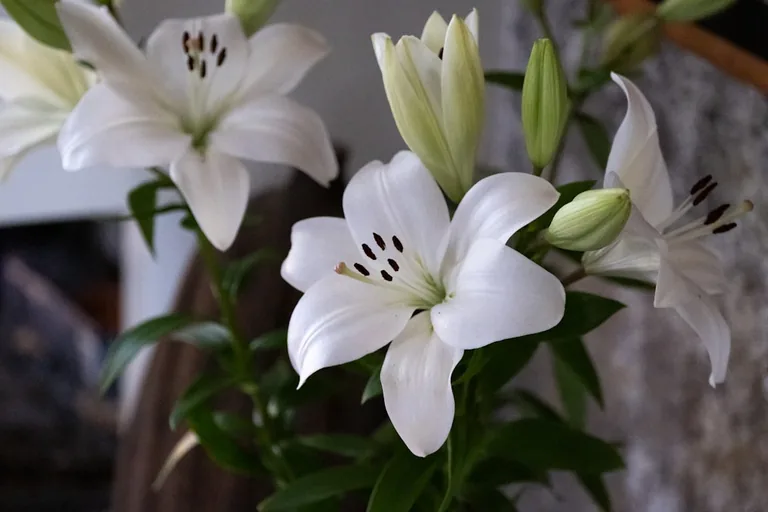
Mature peace lily houseplant with glossy dark green leaves and tall white spathes
Peace lily with elegant white spathe bloom
Perfect indoor plant for bright, indirect light locations

Essential Care Requirements

โ˜€๏ธ

Light Requirements

Bright, indirect light

Can tolerate low light but blooms best with bright, filtered light

๐Ÿ’ง

Watering Needs

Weekly, deep watering

Allow top inch of soil to dry between waterings

๐Ÿ’จ

Humidity Level

40-60% humidity

Mist leaves or use humidity tray to increase moisture

๐ŸŒก๏ธ

Temperature Range

65-80ยฐF (18-27ยฐC)

Avoid cold drafts and sudden temperature changes

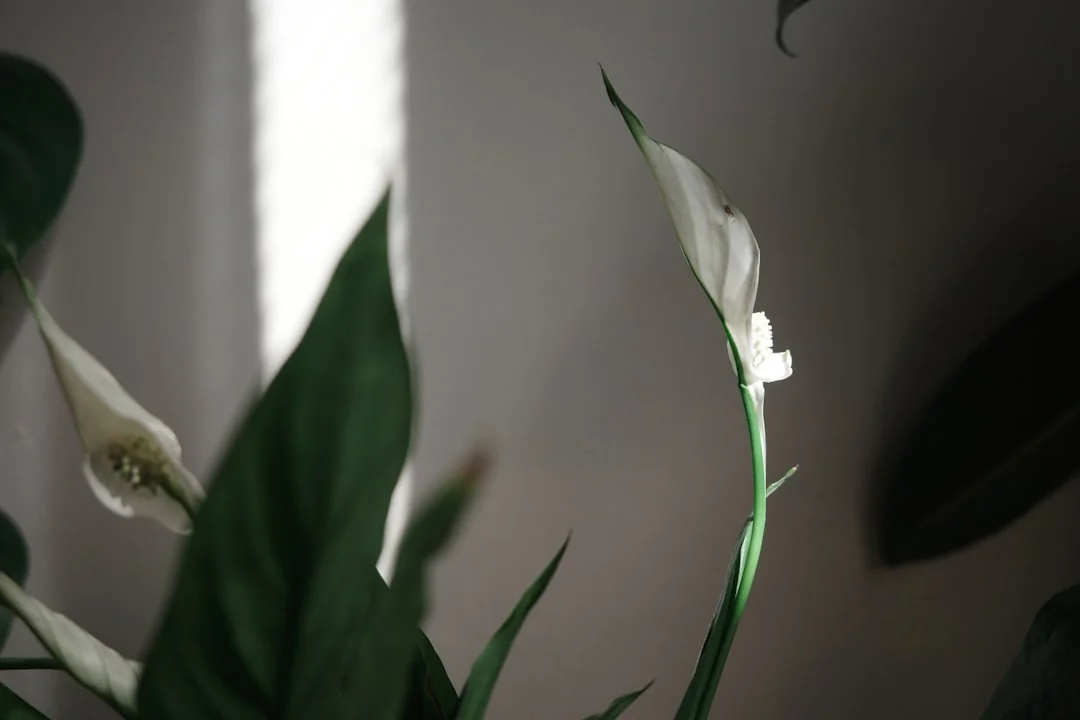
Peace lily blooming in a low-light indoor corner with multiple white flowers rising above foliage
One of few houseplants that bloom reliably in low light โ€” place near a north-facing window for consistent flowering without direct sunPhoto by Flower Types Studio / Flower Types

Complete Care Instructions

๐Ÿ’ง Watering Your Peace Lily

Peace lilies prefer consistently moist (but not soggy) soil. Water when the top inch of soil feels dry to the touch. These plants are dramatic and will droop slightly when thirsty, making it easy to know when they need water.

  • Frequency: Typically once per week, adjust based on season
  • Method: Water thoroughly until water drains from bottom
  • Water quality: Use filtered or distilled water if tap water is heavily treated
  • Drainage: Ensure pot has drainage holes to prevent root rot

โ˜€๏ธ Light Requirements

Peace lilies are adaptable to various light conditions but perform best in bright, indirect light. They can tolerate lower light but may bloom less frequently. Avoid direct sunlight which can scorch the leaves.

  • Ideal location: Near north or east-facing window
  • Office lighting: Thrives under fluorescent lights
  • Low light tolerance: Can survive but growth slows
  • Signs of too much light: Brown, crispy leaf edges

๐ŸŒฟ Fertilizing Schedule

Feed your peace lily monthly during spring and summer with a balanced, diluted houseplant fertilizer. Reduce feeding in fall and winter when growth naturally slows.

  • Growing season: Monthly with 20-20-20 fertilizer
  • Dilution: Use at 1/4 strength to prevent burning
  • Dormant season: Feed every 6-8 weeks in winter
  • Organic options: Compost tea or worm casting fertilizer
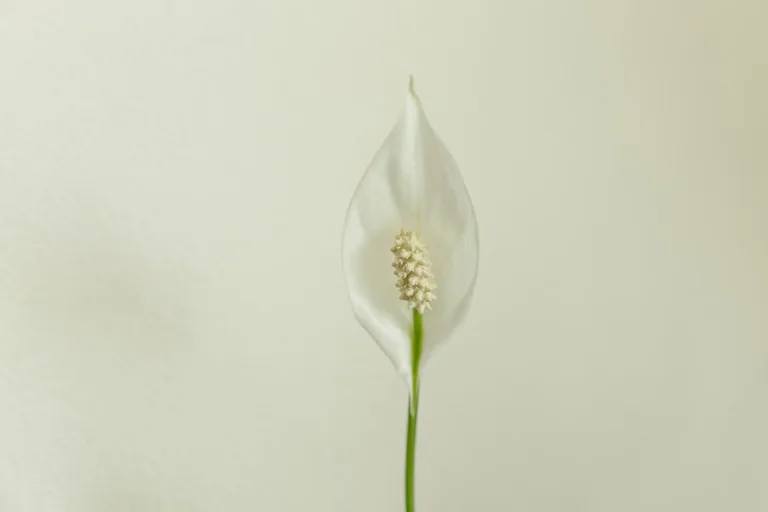
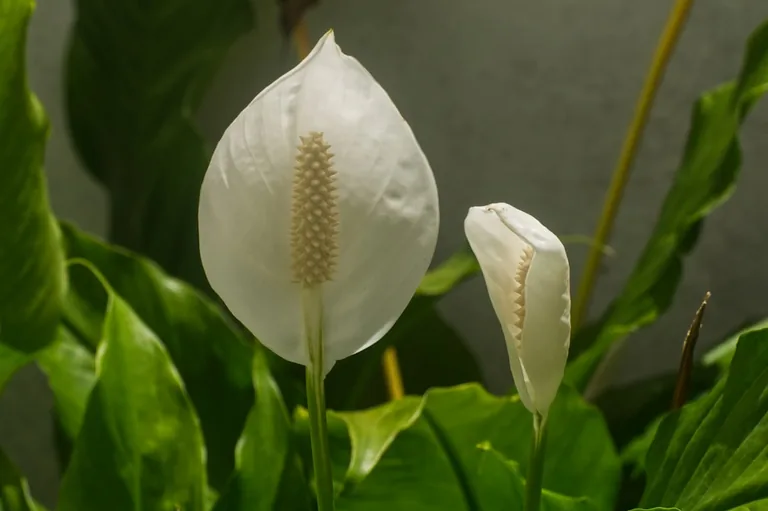
Close-up of a peace lily spathe and spadix showing the smooth white bract and green center spike
The white 'petal' is actually a modified leaf called a spathe โ€” each bloom lasts 4-6 weeks before gradually turning greenPhoto by Flower Types Studio / Flower Types

How to Propagate Peace Lilies

Peace lilies are easily propagated through division, best done during repotting in spring when the plant is actively growing.

1
Choose Healthy Division
Select a section with 3-4 leaves and roots
2
Prepare New Pot
Use well-draining potting mix in appropriate sized pot
3
Careful Separation
Gently separate root systems without damaging
4
Plant Division
Plant at same depth as original, water thoroughly
5
Recovery Care
Place in bright, indirect light and maintain humidity
Peace lily in a ceramic pot on an office desk demonstrating its compact indoor growth habit
Compact peace lily cultivars like 'Wallisii' stay under 12 inches tall โ€” perfect for desks and shelves where space is limitedPhoto by Flower Types Studio / Flower Types

Troubleshooting Common Problems

Brown Leaf Tips

Possible Causes:

  • Low humidity
  • Overwatering
  • Fluoride in tap water

Solutions:

  • Increase humidity
  • Adjust watering schedule
  • Use filtered water

Yellow Leaves

Possible Causes:

  • Overwatering
  • Natural aging
  • Too much direct sunlight

Solutions:

  • Reduce watering frequency
  • Remove old leaves
  • Move to indirect light

No Blooms

Possible Causes:

  • Insufficient light
  • Young plant
  • Too much nitrogen

Solutions:

  • Increase light exposure
  • Be patient with young plants
  • Use balanced fertilizer

Drooping Leaves

Possible Causes:

  • Underwatering
  • Root bound
  • Temperature stress

Solutions:

  • Water thoroughly
  • Check if repotting needed
  • Maintain consistent temperature
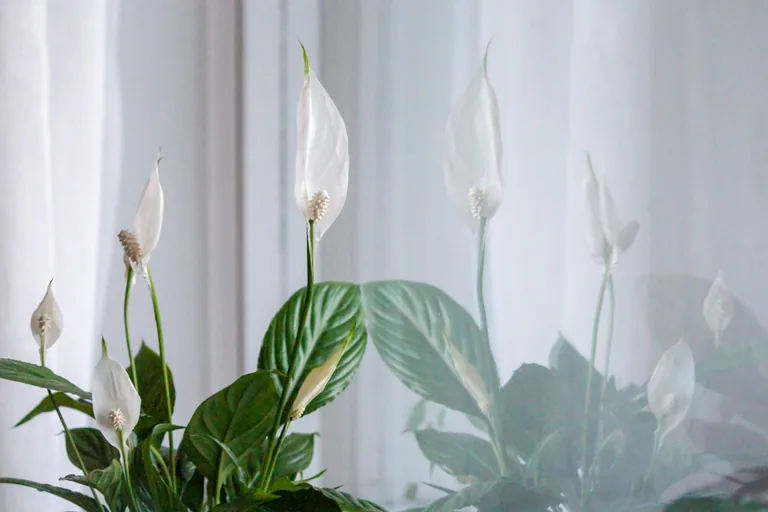
Multiple peace lilies grouped together in a modern white planter creating a lush indoor display
Grouping several peace lilies together raises local humidity โ€” mist leaves weekly or place on a pebble tray to prevent brown leaf tipsPhoto by Flower Types Studio / Flower Types

Seasonal Care Guide

๐ŸŒฑ
Spring
Repot if needed, resume regular fertilizing
โ˜€๏ธ
Summer
Maintain consistent watering, watch for pests
๐Ÿ‚
Fall
Reduce fertilizing, prepare for slower growth
โ„๏ธ
Winter
Water less frequently, maintain humidity

Quick Reference

Scientific Name:Spathiphyllum
Common Names:Peace Lily, White Sails
Plant Type:Tropical Houseplant
Mature Size:1-3 feet tall
Growth Rate:Medium
Pet Safe:No - Toxic

Pro Care Tips

๐Ÿ’ก
Boost Humidity
Group with other plants or use pebble tray
๐ŸŒฟ
Encourage Blooms
Provide consistent bright, indirect light
โœ‚๏ธ
Pruning
Remove spent blooms and yellow leaves regularly

Popular Varieties

'Sensation'
Larger leaves, dramatic presence
'Mauna Loa'
Classic variety, reliable bloomer
'Piccolino'
Compact size, perfect for desks
'Domino'
Variegated green and white foliage
Expert Review

Dr. Maya Chen (Certified Professional Horticulturist (CPH), MS in Plant Science)

Dr. Maya Chen reviewed this peace lily care guide for accuracy, covering indoor growing conditions, watering techniques, and pet safety information.

  • Verified indoor care requirements and light recommendations
  • Reviewed watering frequency and humidity guidance
  • Confirmed propagation steps and seasonal care advice
  • Validated pet toxicity warnings and common problem solutions